
Sau npe rau Cov Kev Ceeb Toom Hais Txog Kev Kaw Hluav Taws Xob
Tau txais email, ntawv los sis hu xov tooj txog kev puas tsuaj hauv koj cheeb tsam.
- Cov khoom pab kho mob: Ntxiv cov tshuaj uas kws kho mob tau sau tseg — xyuas cov hnub tas sij hawm.
- Cov ntaub ntawv kho mob: Nrog rau cov ntawv luam ntawm koj daim npav pov hwm thiab cov ntaub ntawv kho mob.
- Cov khoom siv huv: ntim cov khoom xws li tshuaj ntxuav tes thiab cov phuam da dej.
- Lub raj nti dej: Cov kws tshaj lij pom zoo ib nkas loos ib tus neeg hauv ib hnub.
- Teeb pom kev thiab cov roj teeb tshiab: Muaj cov roj teeb ntxiv rau tag nrho cov khoom siv uas siv roj teeb. Khaws lawv rau qhov chaw uas koj tuaj yeem nrhiav tau yooj yim.
- Cov zaub mov uas tsis lwj: xaiv cov khoom uas tsis tas yuav ua noj lossis cua sov.
- Phau ntawv qhib tau lub kaus mom: Xaiv cov qhib tau lub kaus mom uas muaj kev nyab xeeb tsis muaj ntug ntse, ntug tsis sib npaug.
- Taub nti dej txia, lub nti dej txia thiab daim dej khov: Muaj ob peb lub rau thaum muaj kev kaw hluav taws xob ntev.
- Cov khoom xav tau tshwj xeeb: Cov no suav nrog cov khoom rau cov menyuam mos, cov laus, lossis cov neeg xiam oob qhab.
- Xov tooj cua siv roj teeb los yog xov tooj cua siv tes crank: Xov tooj cua yuav tso cai rau kev nkag mus rau cov ntawv ceeb toom xov xwm.
- Lwm lub roj teeb uas rov them tau sab nraud: siv lub roj teeb los them xov tooj thiab lwm yam khoom siv hluav taws xob.
- Xov tooj: Khaws cov xov tooj tseem ceeb nyob ze (piv txwv li, tsev kho mob, kws kho mob, cov txheeb ze).
- Install surge protectors to help safeguard electronic equipment.
- Familiarize yourself with your home’s utility boxes (electricity, water and gas) and how to turn them off; keep the proper tools to do so handy. If helpful, post a note to help you remember how to turn them off in an emergency.
- Frequently back up important work and files on your computer.
- Know how to manually open your automatic garage doors or gates.
- Maintain at least half a tank of gas or charge level in one car at all times.
- If you have a portable gas or propane generator, identify an outdoor location where you can safely use it during a power outage, and never use it indoors.
- Rau cov menyuam yaus, suav nrog cov khoom lom zem nrog rau cov khoom siv saib xyuas tseem ceeb.
- Rau cov tsiaj, suav nrog zaub mov, ib lub dab tshos nrog ib daim cim npe, ib txoj hlua khi, thiab ib lub thawv los yog crate.
Some people depend on uninterrupted power to operate medical equipment in their homes. We make every effort to notify Medical Baseline (MBL) customers before a scheduled maintenance or rotating outages.
- Our Critical Care Backup Battery (CCBB) program is available at no cost to eligible customers who require the use of an electrically powered medical device, live in a high fire risk area and are currently enrolled in MBL.
- For customers who are not eligible for the CCBB program, we offer rebate options in the SCE Marketplace for portable power stations and portable generators. Enhanced incentive options for generators are available for customers enrolled in MBL, California Alternate Rates for Energy (CARE) or Family Electric Rate Assistance (FERA).
- Develop an emergency or backup plan with your medical equipment supplier. Some companies may supply additional medical equipment and other services during emergency situations.
- Contact your local fire department to learn whether they maintain a list of people with special medical needs. Adding yourself to their list may help them respond to you faster during emergencies.
- Keep emergency phone numbers handy in your cellphone contacts and near your landline. This includes your doctor, police, fire and durable medical equipment company (if applicable).
- Develop a contingency plan to go to another location in the event of a lengthy power outage. Share this plan with family, friends and others who should be aware.
A generator can provide critical backup power during an outage. However, if generators are incorrectly used, they can pose a serious risk to you and our crews. Every year, people are seriously injured or killed in accidents involving portable generators. Before using a generator, you must consult an electrician to make sure you have the right equipment and a safe setup for your home or business.
When selecting or using a generator, keep the following top of mind:
- Portable vs. permanent generators: Even a properly connected portable generator can become overloaded or overheated, stressing the generator components, which can lead to generator failure. For power outages, permanently installed, stationary generators are better suited for providing backup power to your home or business.
- Work with an electrician: If you decide to permanently wire a generator directly to your home or business, California state law mandates that you notify SCE first by calling 1-800-655-4555. The only recommended method to connect a generator to house wiring is by hiring a licensed electrician to determine the proper setup and install a power transfer switch, in compliance with national, state and local electrical codes.
- Equipment options: Choose a generator rated for more power than you think you will need. This is best determined by an electrician.
- Setup: Do not run a portable generator indoors. Place your generator outdoors in a well-ventilated area, away from windows, doors and vents to prevent carbon monoxide buildup. Ensure there are no flammable materials or vegetation in the area and that fuels such as gasoline, propane and diesel have been safely stored and handled.
- Getting connected: Use a heavy-duty outdoor extension cord to connect electrical equipment to a portable generator. Be sure the cord is rated higher than the sum of the power drawn by the connected appliances. Make sure the cord has no cuts or tears, and that the plug has all three prongs. Do not connect a portable generator to your home's electrical wiring or electrical panel. This can lead to serious injury or electrocution.
- Safety hazards: Be sure to follow the safety directions for your generator to avoid hazards like carbon monoxide (CO) poisoning, electric shock, electrocution and fire. Don’t run cords under carpet, rugs or furniture as heat could build up or the cords could be damaged without you knowing, creating a fire or electrocution hazard.
- Beware of backfeed: Never try to power your home by plugging a generator into a wall outlet or temporarily wiring into the electrical panel. This can create backfeed, which is extremely dangerous and poses a danger of electrocution to you, your neighbors or utility workers who may be working on nearby power lines.
- Develop a business continuity plan that defines employee roles and responsibilities during an emergency.
- Identify an off-site meeting area for evacuation and communicate this location to all staff.
- Create a list of equipment that must be turned off during an outage to prevent damage.
- Train all on-site employees on how to manually operate security gates.
- Make sure everyone knows how to safely shut off utilities — including electricity, water and gas — and keep the proper tools easily accessible.
- If you have a portable gas or propane generator, identify an outdoor location where you can safely use it in a power outage – never use it indoors.
If you plan to connect a backup generator to your building’s electrical system, please notify SCE by dialing 1-800-990-7788. This helps protect our employees from possible electrical backfeed.
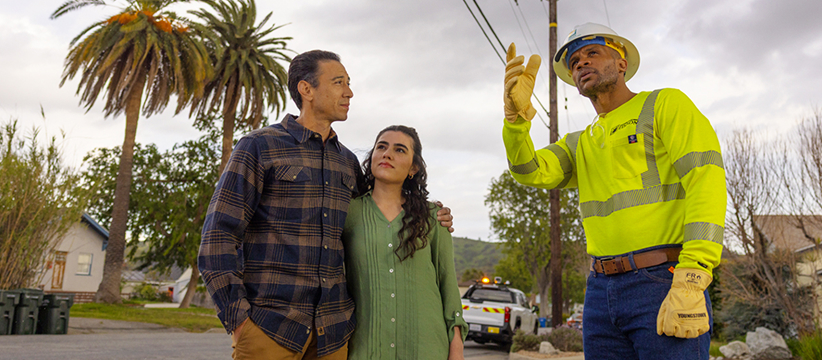
Cov Chaw Nyab Xeeb Thiab Kev Txhawb Nqa
Lub xeev xav kom muaj kev sib txuas lus rau pej xeem ntawm kev kawm txog kev npaj thaum muaj xwm ceev, uas tau txais nyiaj los ntawm cov neeg them nqi.

